The Anatomy of an Icon: The Hermès Birkin 25 in Fauve Barenia Faubourg with Palladium Hardware
Among the vast pantheon of haute horlogerie, high jewelry, and luxury leather goods, few objects command the reverence, desire, and historical gravity of an Hermès Birkin. Conceived in 1984 following a chance encounter between actress Jane Birkin and Hermès Chief Executive Jean-Louis Dumas on a flight from Paris to London, the Birkin was born out of a practical need for a spacious, refined tote suited to modern mobility. Over four decades, this utilitarian silhouette has transcended its original purpose, morphing into the ultimate symbol of sartorial discretion and artistic mastery.
While classic Birkins fashioned from Togo, Clemence, or Epsom leathers remain ubiquitous fixtures within collector circles, certain specifications achieve a legendary status by virtue of their material history, textural complexity, and architectural proportion. The Hermès Birkin 25 in Fauve Barenia Faubourg paired with Palladium Hardware represents one of the most exquisite intersections of heritage leatherwork and contemporary design in the house's storied history. It is a masterpiece of contrasts: rooted in nineteenth-century saddlery yet scaled to modern proportions; tactile and organic in tone yet framed by cool, precision-engineered metal.
The Heritage of Barenia and the Creation of Faubourg
To appreciate the Birkin 25 in Fauve Barenia Faubourg, one must first understand the sacred position Barenia leather occupies within the house of Hermès. Originally used by the maison's master saddlers to craft equestrian gear, traditional Barenia—sourced from Tanneries Haas in Alsace—is a smooth, double-tanned calfskin celebrated for its natural finish, aromatic scent, and miraculous ability to absorb marks. The tanning of Barenia relies on a complex hybrid process combining vegetable and chrome tannages. After initial tanning, the hides are submerged for five to six weeks in a propriety blend of nine natural oils.
The result of this intensive oil treatment is a leather that feels buttery and alive. Traditional smooth Barenia is famous for developing a dramatic, glossy patina over time. Every touch of the hand transfers natural skin oils into the hide, causing the material to darken, mature, and register the passage of time. However, smooth Barenia is inherently sensitive to water droplets, fingernail scrapes, and environmental wear. While purists revere these marks as signs of character, other collectors desired a material that maintained the warm essence of Barenia while providing enhanced structural resilience.
Enter Barenia Faubourg. Introduced by Hermès as a modern evolution of its classic saddle calfskin, Barenia Faubourg undergoes the exact same double-tanning and oil-soaking process as traditional Barenia, maintaining the iconic equestrian fragrance and supple hand. The defining difference lies in its surface finish: Barenia Faubourg features a fine, microscopic stamped grain.
This micro-grain fundamentally alters the performance and aesthetic of the bag. The textured surface diffuses light, giving the material a soft, velvet-like depth rather than a flat sheen. More importantly, the grain acts as a natural camouflage against daily scuffs and light abrasions, allowing the leather to withstand daily wear while continuing to develop a rich, subtle patina over years of use. Named after the maison's flagship sanctuary at 24 Rue du Faubourg Saint-Honoré in Paris, Barenia Faubourg bridges the gap between historical saddlery traditions and the functional demands of contemporary life.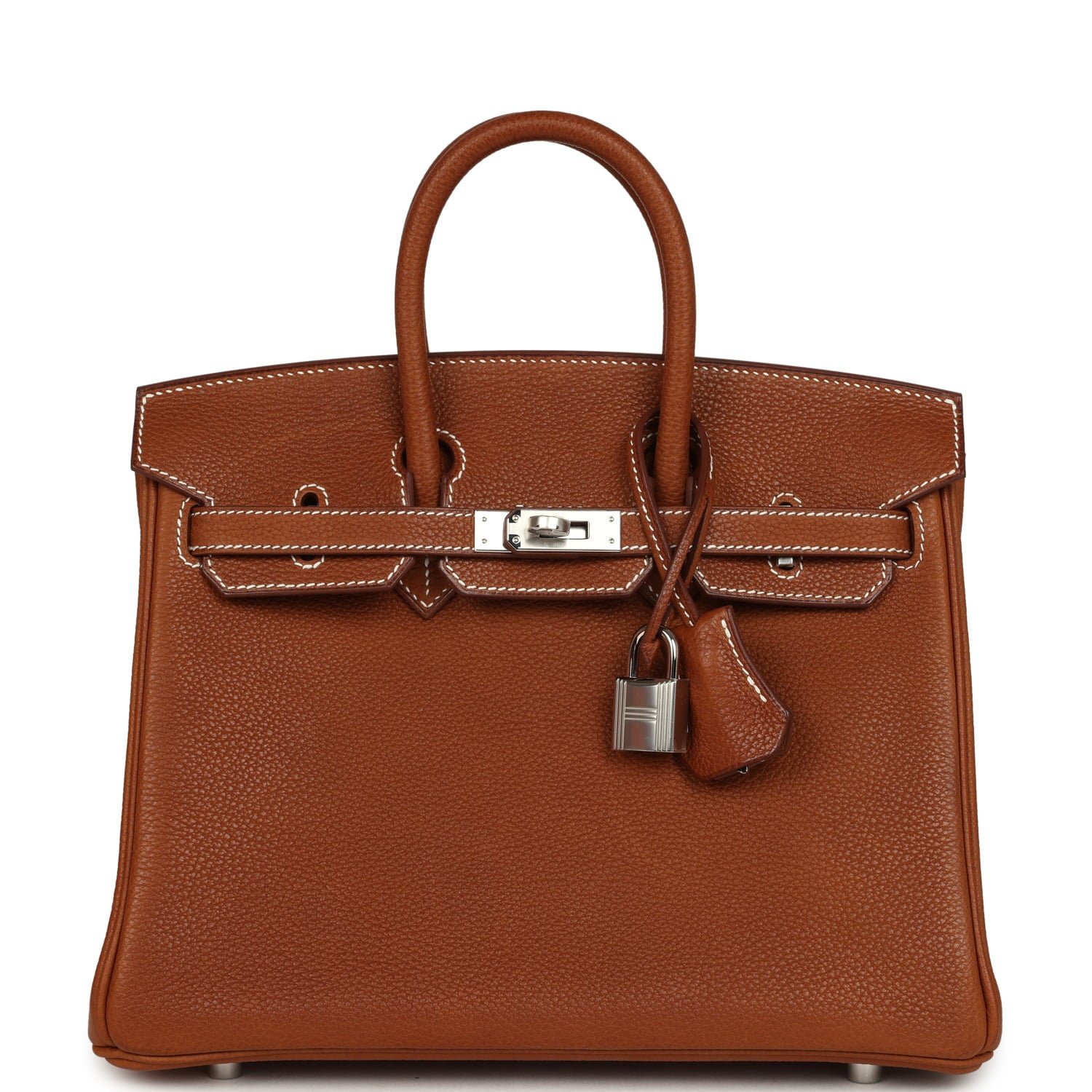
Fauve: The Definitive Hermès Hue
Color selection at Hermès is an exact science, with the house maintaining an archive of thousands of distinct dyes developed over generations. Yet among every shade of brown, gold, and tan created in the Faubourg ateliers, Fauve stands apart.
Fauve, translated from the French word for "fawn" or "wild," is the natural, unadulterated shade of traditional vegetable-tanned leather. It is not merely a color applied to the hide; it is the color of the leather itself, enhanced by natural oils and transparent dyes that allow the organic beauty of the calfskin to show through.
On Barenia Faubourg, Fauve radiates a rich, warm honey-caramel tone with subtle golden and amber undertones. Unlike synthetic dyes that cover surface flaws with heavy pigments, the Fauve dye on Barenia Faubourg preserves the hide's natural variations. The fine grain of the Faubourg finish creates light and shadow across the warm brown backdrop, giving the bag a dynamic visual warmth.
As the bag ages, Fauve undergoes a transformation. Under the influence of sunlight, ambient oxygen, and the natural oils from its owner's hands, the warm tan deepens gradually into a deep cognac shade. This evolving color profile ensures that no two Fauve Barenia Faubourg Birkins ever look entirely identical after a few years of wear. The bag becomes a living memory, reflecting the journeys, climates, and daily routines of the person who carries it.
Architectural Proportions: The Birkin 25
The size of a Birkin radically changes its aesthetic voice and functional role. The Birkin 25, often referred to by collectors as the "Baby Birkin," measures approximately 25 centimeters in length, 20 centimeters in height, and 13 centimeters in depth. Introduced in response to a global shift toward smaller, more versatile handbags, the 25 scale has become the most coveted silhouette in contemporary luxury.
At 25 centimeters, the Birkin achieves a geometric harmony. It condenses all the traditional, hand-crafted details of the larger 35 and 40 centimeter models into a compact frame. The proportions of the sangles (closure straps), the touret (toggle stem), the plaque hardware, and the top handles are scaled with mathematical precision to preserve the iconic trapezoidal silhouette without feeling cramped or crowded.
Carrying a Birkin 25 in Fauve Barenia Faubourg offers a distinct tactile experience. The smaller volume gives the bag structural integrity, preventing the heavy sagging that can affect larger soft-leather bags over decades of use. The rolled twin handles fit comfortably over the forearm or can be held gracefully in the hand, making it ideal for transitioning seamlessly from morning appointments to evening engagements. Despite its petite footprint, the interior—lined in tonal, supple chèvre (goatskin) leather—is surprisingly accommodating, designed to effortlessly house a smartphone, compact wallet, keys, cosmetics, and small personal electronics.
The Metallic Counterpoint: Palladium Hardware
While gold hardware on Fauve leather creates a traditional, warm, monochromatic look, the choice of Palladium Hardware (PHW) introduces a sleek contrast. Palladium, a rare metal belonging to the platinum group, is prized in fine jewelry and luxury leather goods for its brilliant silvery-white luster, exceptional resistance to tarnish, and hypoallergenic properties.
On a Fauve Barenia Faubourg Birkin 25, the palladium hardware functions as a cool anchor against the rich warmth of the leather. The silvery sheen of the plaques, the sangles' metal tips, the center toggle, the signature padlock, and the protective bottom feet (clou) catch the light with clarity. This juxtaposition of icy metal against warm caramel calfskin gives the bag a contemporary, fresh feel.
Furthermore, the palladium hardware highlights the historic white contrast stitching that is a signature of Barenia leather craftsmanship. Master artisans stitch Barenia items using durable white linen thread treated with beeswax, utilizing the house's traditional two-needle saddle-stitch method. The bright white thread echoes the cool tones of the palladium hardware, creating a cohesive visual frame that highlights the clean lines and construction of the bag.
The Art of Construction: Artisan Craftsmanship
Every Hermès Birkin is a triumph of singular craftsmanship, built entirely from start to finish by a single artisan in one of the house’s specialized leather workshops across France. The creation of a Birkin 25 in Fauve Barenia Faubourg requires over eighteen hours of precise manual labor, reflecting techniques refined since Hermès was founded as a harness workshop in Paris in 1837.
The construction process begins with rigorous material selection. Out of thousands of hides processed, only a tiny fraction meets the flawless standards required for a Barenia Faubourg Birkin. The artisan carefully cuts each piece, paying close attention to the direction and consistency of the natural grain.
Once cut, the assembly involves several meticulous steps:
The artisan uses the traditional cousu sellier (saddle stitch) technique. Using two needles attached to a single waxed linen thread, the artisan passes the thread in opposing directions through hand-punched awl holes. This creates a stitch that is far stronger than any machine lock-stitch; even if one thread breaks, the remaining thread holds the leather securely in place.
The cut edges of the Barenia leather are raw and require rigorous finishing. The artisan repeatedly sands the raw edges, coats them with a natural beeswax sealant, and paints them by hand with dark edge stain. This process is repeated multiple times until the edges are smooth, sealed, and impervious to moisture.
The palladium hardware is attached using a technique known as pearling (perlage). Rather than using modern screws or adhesives, the metal studs securing the hardware plaques are hammered by hand until the pins mushroom into smooth, rounded pearls. This ensures the hardware remains permanently anchored to the thick Barenia hide.
The interior is lined with matching chèvre leather, chosen for its lightweight durability and grain, before the structured base and four bottom feet are secured. Finally, the artisan stamps the bag with the blind stamp—a discreet sequence of letters and symbols inside the interior sangles indicating the year of production and the specific artisan who constructed the piece.
Collector Value and Market Dynamics
Within the secondary and auction markets, the Hermès Birkin 25 in Fauve Barenia Faubourg with Palladium Hardware commands a premium position. The value of this specific configuration stems from three main factors: rarity, leather desirability, and size preference.
First, Barenia Faubourg is produced in extremely limited quantities each year. Because the tanning process requires five to six weeks of oil soaking and specialized raw hide selection, Hermès allocates Barenia Faubourg to its top artisans sparingly. Securing a Barenia bag directly from a boutique requires a dedicated client history, making new examples exceptionally rare.
Second, the market preference for smaller luxury bags has elevated the Birkin 25 to the top of collector demand. While 30 and 35 centimeter Birkins are celebrated for their classic practicality, the 25 scale consistently achieves higher resale premiums due to its modern versatility and night-to-day wearability.
Finally, the inclusion of Palladium Hardware offers an appealing aesthetic that appeals to both traditional collectors and modern luxury buyers. While Gold Hardware provides a classic equestrian feel, Palladium gives the organic Fauve leather a contemporary look. On the secondary market, pristine or mint-condition examples of this exact configuration routinely trade at significantly higher prices than their original retail value, solidifying its standing as both a wearable work of art and an asset class.
Ownership, Care, and the Philosophy of Living Leather
Unlike synthetic luxury items designed to remain static and unchanged, owning a Fauve Barenia Faubourg Birkin requires embracing a dynamic philosophy of luxury. This bag is designed to interact with the world, age gracefully, and tell a personal story through its evolving patina.
Care for Barenia Faubourg differs slightly from smooth Barenia or standard printed leathers like Togo. Because Barenia Faubourg contains a rich concentration of natural oils, light surface scratches can often be buffed away simply by rubbing the area gently in circular motions with a clean thumb or a soft microfiber cloth. The friction warms the internal oils, causing them to migrate to the surface and fill in minor scuffs.
While Barenia Faubourg offers improved scratch resistance due to its grained texture, it should still be protected from direct water saturation, harsh chemical cleaning agents, and prolonged exposure to direct heat or sunlight. If caught in light rain, the bag should be gently blotted—never rubbed—with a dry cotton cloth and allowed to air dry at room temperature. Over-conditioning should be strictly avoided; the leather's internal oil reservoir is sufficient to keep it supple for years.
When stored, the bag should be gently stuffed with acid-free tissue paper or a tailored bag pillow to preserve its shape, placed inside its cotton dust bag, and stored upright in a climate-controlled environment. The palladium hardware can be maintained by lightly polishing with a soft cloth to remove fingerprints and prevent environmental oxidation.
Timeless Elegance Defined
The Hermès Birkin 25 in Fauve Barenia Faubourg with Palladium Hardware is far more than an accessory; it is a synthesis of historic saddle-making traditions, architectural scaling, and material intelligence. It honors the house's equestrian heritage through its double-tanned saddle leather and contrast stitching, while catering to modern sensibilities with its compact 25cm size, textured finish, and palladium accents.
In a world increasingly dominated by mass production and fleeting trends, this bag stands as a testament to the power of slow luxury. It requires patience to craft, expertise to source, and an appreciative owner to carry it through life. With every passing year, as the Fauve leather deepens and the patina matures, the Birkin 25 in Barenia Faubourg only grows more beautiful—a heirloom object that bridges past, present, and future.


Comments
Post a Comment