Exploring the Hermès Birkin 30 in Ardoise Togo with Gold Hardware
In the rarefied universe of high fashion and luxury accessories, few objects command the enduring reverence, mystique, and cultural capital of the Hermès Birkin. Born in 1984 from an accidental, fate-sealed airplane encounter between actress Jane Birkin and Hermès chief executive Jean-Louis Dumas, the Birkin has evolved far beyond its original utilitarian design as a spacious carryall for young mothers. Today, it stands as the ultimate symbol of exclusivity, meticulous craftsmanship, and enduring financial asset status.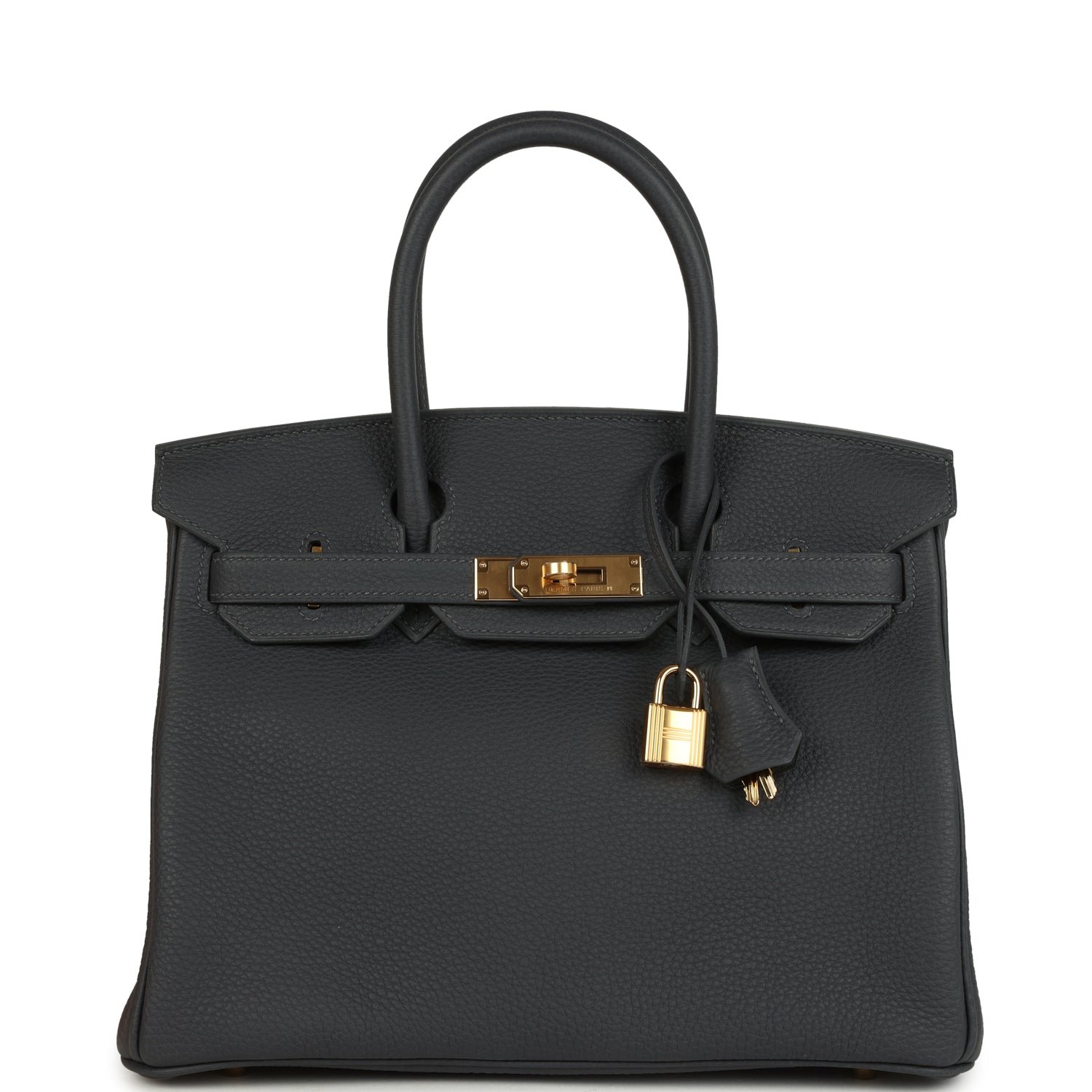
While classic colorways like Black, Etoupe, and traditional Gold command a massive following, special variants capture the imagination of seasoned collectors. Among these, the Hermès Birkin 30 in Ardoise Togo leather with Gold Hardware represents a sublime convergence of understated sophistication and rare chromatic depth. This comprehensive analysis explores every facet of this extraordinary piece—from its architectural proportions and legendary leather to the nuanced beauty of the Ardoise shade paired with gleaming gold.
1. The Genesis and Philosophy of the Birkin 30
To understand the Birkin 30, one must first appreciate the careful sizing hierarchy established by Hermès. Traditionally produced in core sizes ranging from the petite Birkin 25 to the spacious Birkin 35 and travel-ready Birkin 40, the Birkin 30 occupies the absolute "sweet spot" of the collection.
The Goldilocks Proportion: While the Birkin 35 mirrors the original oversized dimensions intended for daily travel, the Birkin 30 (measuring approximately 30cm wide, 22cm high, and 16cm deep) offers a more balanced, streamlined silhouette. It easily accommodates daily essentials—such as a smartphone, cardholder, cosmetics pouch, keys, and a compact notebook—without losing its structure or becoming cumbersome.
Day-to-Night Versatility: The Birkin 30 transitions effortlessly from a structured daytime office companion to an elegant dinner accessory. It is substantial enough to feel luxurious yet compact enough to carry comfortably in the crook of the arm or by the rolled leather top handles.
2. The Allure of Ardoise: A Masterclass in Nuance
Color selection is perhaps the most critical decision in the Hermès ecosystem. While staple neutrals dominate the market, rare or uncommon seasonal shades like Ardoise offer collectors an opportunity to showcase subtle individuality.
Understanding Ardoise: Named after the French word for "slate," Ardoise is a sophisticated, moody gray with deep undertones. Depending on the lighting, it can lean into cool charcoal or exhibit warm, earthy gray-brown undertones. It is a chameleon color that avoids the stark flatness of a pure industrial gray.
Versatility Over Trend: Ardoise operates as a true neutral. It possesses the grounding depth of black or dark charcoal but feels softer, more organic, and infinitely more complex. It pairs seamlessly with winter wools, autumn cashmeres, and crisp summer linens alike, making it an exceptionally flexible addition to a wardrobe.
3. The Canvas: Togo Leather and Its Legendary Resilience
The choice of leather defines not only the tactile experience of a Birkin but also how the bag ages, slumps, and holds its color over decades of wear. For the Ardoise Birkin 30, Togo leather is widely considered the gold standard.
Origin and Characteristics: Introduced by Hermès in 1997 and crafted from baby calfskin, Togo is famed for its prominent, small grain (known as veau grain Togo). It features a distinct natural pebble texture that is smooth to the touch yet remarkably resilient.
Structure and Slouch: Togo possesses a natural stiffness that allows a brand-new Birkin 30 to maintain a crisp, upright architectural shape. Over time, however, as the fibers relax with use, Togo develops a gorgeous, soft slouch while retaining its structural integrity.
Practical Durability: Unlike box calfskin, which scratches easily, or swift leather, which requires delicate handling, Togo is celebrated for its scratch-resistant and low-maintenance nature. Natural oils in the leather help minor scuffs blend seamlessly into the grain, ensuring the bag remains pristine even with regular wear.
4. The Hardware Debate: Ardoise Meets Warm Gold
Hardware configurations on Hermès bags typically default to either Palladium (silver-toned) or Gold. While cooler grays are often paired automatically with palladium, pairing Ardoise with Gold Hardware (GHW) is a stroke of stylistic genius.
The Contrast of Warmth and Cool: The rich, polished 18-karat gold-plated hardware brings an instant pop of warmth to the cool, slate-gray canvas of Ardoise. This juxtaposition creates a striking visual tension that elevates the bag from a simple leather carryall to a sophisticated piece of wearable art.
The Heritage Touches: The gold hardware package includes the iconic signature turn-lock (fermoir), the front straps (sangles), the padlock (cadenas), the leather-wrapped key clochette, and the four protective feet (clou de selle) at the base of the bag. Each piece of hardware is meticulously polished, serving as jewelry for the handbag.
5. Artisanal Craftsmanship: The Soul of the Bag
Every Hermès Birkin is an indictment of modern fast fashion, standing instead as a monument to slow, deliberate craftsmanship.
The Single-Artisan Rule: Unlike assembly-line luxury goods, a single Hermès artisan is responsible for constructing a Birkin from start to finish. This process requires upwards of 18 to 25 hours of intense labor.
Saddle Stitching: Utilizing traditional saddle-stitching techniques—often using two needles simultaneously through a single awl hole—the artisan ensures that if one thread were somehow severed, the entire structural seam would not unravel.
The Blind Stamp: Discreetly embossed on the interior strap or behind the front closure flap is the artisan's unique blind stamp, alongside a production code indicating the year of manufacture and workshop origin. This acts as the bag’s birth certificate and a testament to its authentic lineage.
6. Investment Value and Market Dynamics
Beyond aesthetic and tactile pleasure, the Hermès Birkin occupies a unique position in global finance, often outperforming traditional asset classes.
Scarcity and Exclusivity: Hermès deliberately controls the supply of its products. Walking into a boutique and purchasing a Birkin off the shelf is virtually impossible; it requires building a substantial purchase history (buying ready-to-wear, shoes, fine jewelry, and home goods) over years.
The Resale Ecosystem: Because boutique acquisition is so rigorous, the secondary market thrives. Classic sizes like the Birkin 30 in desirable leather-and-hardware combinations consistently hold—or significantly appreciate—above their original retail price. A neutral yet rare colorway like Ardoise combined with gold hardware attracts collectors looking for something distinct from standard black or gold bags, driving strong demand on the pre-owned luxury market.
Conclusion
The Hermès Birkin 30 in Ardoise Togo with Gold Hardware is much more than a luxury accessory; it is a masterclass in design restraint and material excellence. By wedding the indestructible practicality of Togo leather with the complex, muted elegance of Ardoise gray and the regal warmth of gold hardware, this configuration achieves a rare harmony. For the discerning collector, it represents an investment in timeless style, uncompromised craftsmanship, and enduring exclusivity that will remain relevant for generations to come.


Comments
Post a Comment