An In-Depth Exploration of the Hermès Birkin 30 in Bleu Hydra Togo with Palladium Hardware
In the pantheon of global luxury fashion, few objects command the universal reverence, fascination, and desire of an Hermès Birkin bag. More than just an accessory, the Birkin is a cultural touchstone, an enduring symbol of craftsmanship, and a savvy financial asset that has consistently outperformed traditional investments over decades. Among the myriad combinations of sizes, leathers, and colors released by the historic Parisian maison, certain configurations stand out as absolute masterclasses in design.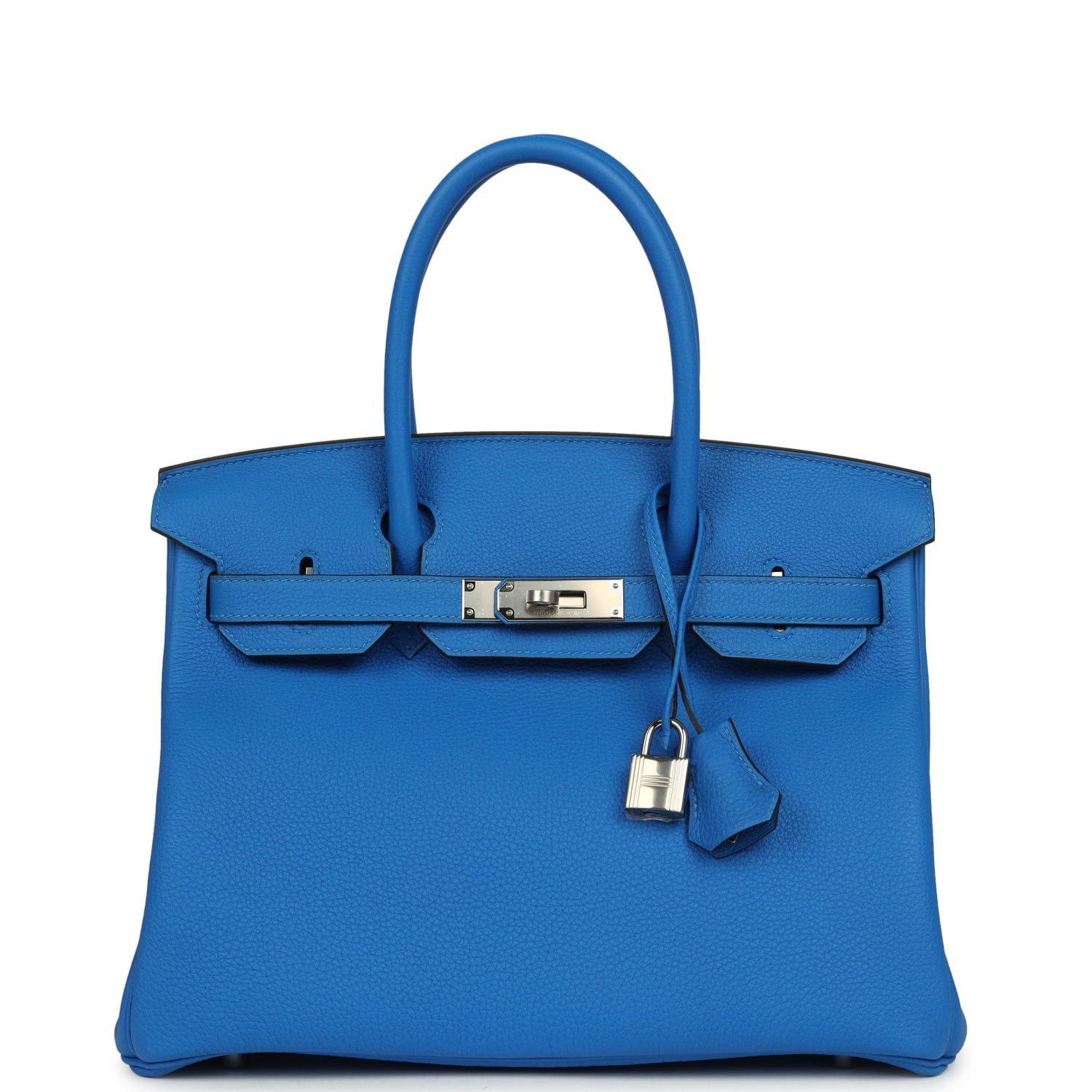
One such combination is the Hermès Birkin 30 in Bleu Hydra Togo Leather with Palladium Hardware. This particular specification marries one of Hermès’ most electrifying blue hues with its most beloved everyday leather and sleek, modern metallic accents. To examine this bag is to explore the intersection of haute couture, peerless artisanal heritage, and contemporary style.
1. The Genesis and Legacy of the Birkin
To understand the weight and prestige of the Birkin 30, one must first look back to its serendipitous origins in 1984. As legendary lore recounts, actress and singer Jane Birkin found herself seated next to Jean-Louis Dumas, then-CEO of Hermès, on a flight from Paris to London. After her straw basket bag spilled its contents in the overhead compartment, Birkin lamented to Dumas that she could not find a weekend bag that was both elegant and large enough to hold her daily essentials as a young mother.
Dumas sketched a supple, spacious leather carryall with a dedicated space for baby bottles right there on the sick bag. That sketch became the blueprint for the Birkin. Over the subsequent four decades, the bag evolved from a practical utility tote for jet-setters into the ultimate status symbol of exclusivity.
While early decades favored larger dimensions like the Birkin 35 and 40, the Birkin 30 has emerged as the quintessential "sweet spot" for modern collectors. It offers a harmonious balance: compact enough to transition effortlessly from day to evening, yet roomy enough to house a smartphone, small wallet, keys, cosmetics, and daily essentials without sacrificing its structured silhouette.
2. Anatomy of Perfection: Bleu Hydra
Color is perhaps the most critical element in the Hermès lexicon. The maison is legendary for its ability to develop complex, deeply saturated shades that cannot be replicated elsewhere. Bleu Hydra—named after the mythical multi-headed serpent or the brilliant blue freshwater hydra polyp—is widely considered one of the most mesmerizing blues ever produced by Hermès.
The Visual Impact of Bleu Hydra
Unlike muted or dusty neutrals like Etoupe or Gold, or even darker navy tones like Bleu Nuit, Bleu Hydra is a vibrant, electric cyan-blue with rich turquoise undertones. It possesses an incredible depth of color that seems to shift depending on the ambient lighting:
In natural sunlight: It explodes into a lively, tropical azure that commands attention from across a room.
In subdued indoor or evening lighting: It deepens into a sophisticated, jewel-toned sapphire hue.
For a wardrobe built on neutrals—crisp whites, charcoal grays, stark blacks, and camel cashmeres—a Bleu Hydra Birkin serves as the ultimate "pop" color. It bridges the gap between playful summer vibrancy and winter elegance, making it a surprisingly versatile year-round statement piece.
3. The Canvas: Togo Leather and Its Enduring Appeal
The choice of leather defines not only the texture and weight of a Birkin, but also how it ages over time. The Birkin 30 described here is crafted from Togo leather, derived from baby calf. Togo is, by a wide margin, the most popular and sought-after leather in the Hermès lineup, and for good reason.
Characteristics of Togo Leather
Grain and Texture: Togo is characterized by a prominent, rounded grain (known as the vein or pebble) that gives the leather a rich, tactile dimension. It features fine vertical lines carved into the grain, adding subtle depth.
Durability and Scratch Resistance: One of Togo’s greatest assets is its resilience. It is remarkably sturdy, holds up exceptionally well against accidental scratches, and can withstand the rigors of daily use far better than smoother box-calfs or delicate exotics.
Structure and Softness: Togo strikes a brilliant middle ground. It possesses enough natural stiffness to allow the Birkin to maintain its crisp architectural lines, yet it softens gracefully over time, developing a plush, slouchy character that seasoned collectors adore.
Weight: Despite its thick appearance, Togo is relatively lightweight compared to leathers like Clemence, ensuring that a loaded Birkin 30 remains comfortable to carry in the crook of the arm or by the handles.
4. The Finishing Touch: Palladium Hardware (PHW)
Every Hermès bag is completed with metallic hardware, meticulously polished and engraved. For the Bleu Hydra Birkin 30, collectors are often presented with a choice between Gold Hardware (GHW) and Palladium Hardware (PHW).
Palladium, a rare, silvery-white precious metal belonging to the platinum group, lends a cool, contemporary edge to the bag.
Aesthetic Harmony: While gold hardware brings out warm undertones, Palladium hardware accentuates the cool, aquatic nature of Bleu Hydra. It acts as a sleek frame that highlights the electric vibrancy of the blue leather without competing with it.
Tonal Cleanliness: For those who prefer white gold or sterling silver jewelry, Palladium hardware ensures absolute metal coordination. It gives the bag a sharper, more modern, and understatedly chic aesthetic compared to the traditional warmth of gold.
The Details: The hardware suite includes the iconic sangles (straps), the central turn-lock toggle, the four protective base feet (clous) that guard the leather base, the padlock, and the leather-encased key clochette. Each piece of metal is stamped with microscopic Hermès hallmarks, testifying to its authenticity and quality.
5. Unmatched Craftsmanship: The Artisan's Touch
What truly separates a Hermès Birkin from standard luxury designer bags is the philosophy of its creation. There are no automated assembly lines in the Hermès ateliers.
Every single Birkin is constructed from start to finish by a single master artisan. Training for this role takes years, and an artisan often spends upwards of 18 to 20 hours crafting just one bag.
The Saddle Stitch: Utilizing the traditional two-needle saddle stitch—a technique that cannot be replicated by sewing machines—the artisan ensures that if a thread were ever to break decades from now, the stitch will not unravel.
Edge Painting and Polishing: The raw edges of the Togo leather are meticulously coated with layers of specialized paint and heat-sealed by hand to create a smooth, waterproof finish.
The Artisan Stamp: Hidden beneath the front flap, a subtle blind stamp consisting of letters, shapes, and artisan codes reveals the exact year of production and the workshop identifier. This personal signature transforms the bag into a piece of wearable art with a traceable pedigree.
6. Investment Value and the Secondary Market
Beyond its undeniable aesthetic triumphs, the Hermès Birkin occupies a singular space in the global economy. Widely studied by financial analysts and luxury economists, Birkins have historically demonstrated an uncanny ability to retain—and frequently multiply—their value on the secondary market.
Unlike fast-fashion accessories that depreciate the moment they leave the boutique, a Birkin 30 in a highly desirable colorway like Bleu Hydra with Togo leather and Palladium hardware is considered a liquid asset.
Supply Constraints: Hermès intentionally limits the production of Birkin bags, and boutiques allocate them strictly to established clients who have spent significant sums on other categories (ready-to-wear, shoes, home goods, and jewelry).
The Primary-Secondary Gap: Because walking into a boutique and purchasing a Birkin off the shelf is nearly impossible, the secondary market thrives. Rare, vivid colors in pristine condition routinely trade at significant premiums over their original retail prices.
Durability as an Asset: Because Togo leather wears exceptionally well, secondary market buyers can acquire a pre-owned or store-fresh Bleu Hydra Birkin with the confidence that its structural integrity will endure for decades, passing down as an heirloom piece.
7. How to Style the Bleu Hydra Birkin 30
Owning a vibrant bag like the Bleu Hydra Birkin 30 is an exercise in stylistic confidence. Because the color is a showstopper, it can anchor an entire outfit or serve as a brilliant punctuation mark. Here are three ways to style this iconic piece:
The Parisian Minimalist: Pair the bag with a crisp white oversized button-down shirt, tailored black cigarette trousers, and classic black loafers. Let the Bleu Hydra color pop against the monochromatic backdrop, turning the bag into the undeniable focal point of your ensemble.
Monochrome Blue Elegance: Embrace a tonal look by styling the bag with navy blue wide-leg trousers, a silk navy blouse, and silver accessories to match the Palladium hardware. Mixing textures—smooth silk against pebbled Togo leather—adds depth and sophistication.
Summer Chic: Style with lightweight linen garments in neutral stone, beige, or sand tones. The vibrant blue evokes the feeling of the Mediterranean Sea, making it the ultimate companion for resort wear, luxury travel, and warm-weather lunches.
Conclusion
The Hermès Birkin 30 in Bleu Hydra Togo with Palladium Hardware is far more than a luxury handbag. It is a celebration of color theory, structural design, and centuries-old French saddlery traditions. It bridges the gap between playful individuality and timeless elegance, offering collectors a piece that is as exhilarating to look at as it is functional to carry.
Whether acquired as a centerpiece for a growing handbag collection, a wearable work of art, or a sound financial investment, this specific configuration remains a crowning achievement in the world of high fashion—a timeless treasure destined to turn heads for generations to come.


Comments
Post a Comment