A Detailed Look at the Hermès Birkin 30 in Etoupe Togo with Brushed Palladium Hardware
- Get link
- X
- Other Apps
Few objects in the world of luxury carry the cultural weight of the Hermès Birkin. Born in 1984 from a chance conversation between actress Jane Birkin and then-Hermès chief executive Jean-Louis Dumas on an Air France flight, the Birkin has evolved from a practical travel bag into one of the most coveted accessories on earth. Within the vast universe of Birkins—sizes, leathers, colors, and hardware combinations too numerous to count—certain configurations achieve a kind of quiet perfection. The Birkin 30 in Etoupe Togo leather with brushed palladium hardware is one of them.
The Size: Why 30 Centimeters Works
The Birkin is produced in several sizes, most commonly 25, 30, 35, and 40 centimeters. The 30 sits at the heart of the lineup and is widely considered the most versatile. It is large enough to hold daily essentials—a wallet, phone, cosmetic pouch, planner, sunglasses, and even a small tablet—yet compact enough to feel elegant rather than cumbersome. For many collectors, the 30 strikes the ideal balance between the statement-making presence of a 35 and the precious, jewel-like proportions of a 25. It transitions seamlessly from a business meeting to dinner, from an airport terminal to a weekend brunch, which is precisely why it remains one of the most requested sizes worldwide.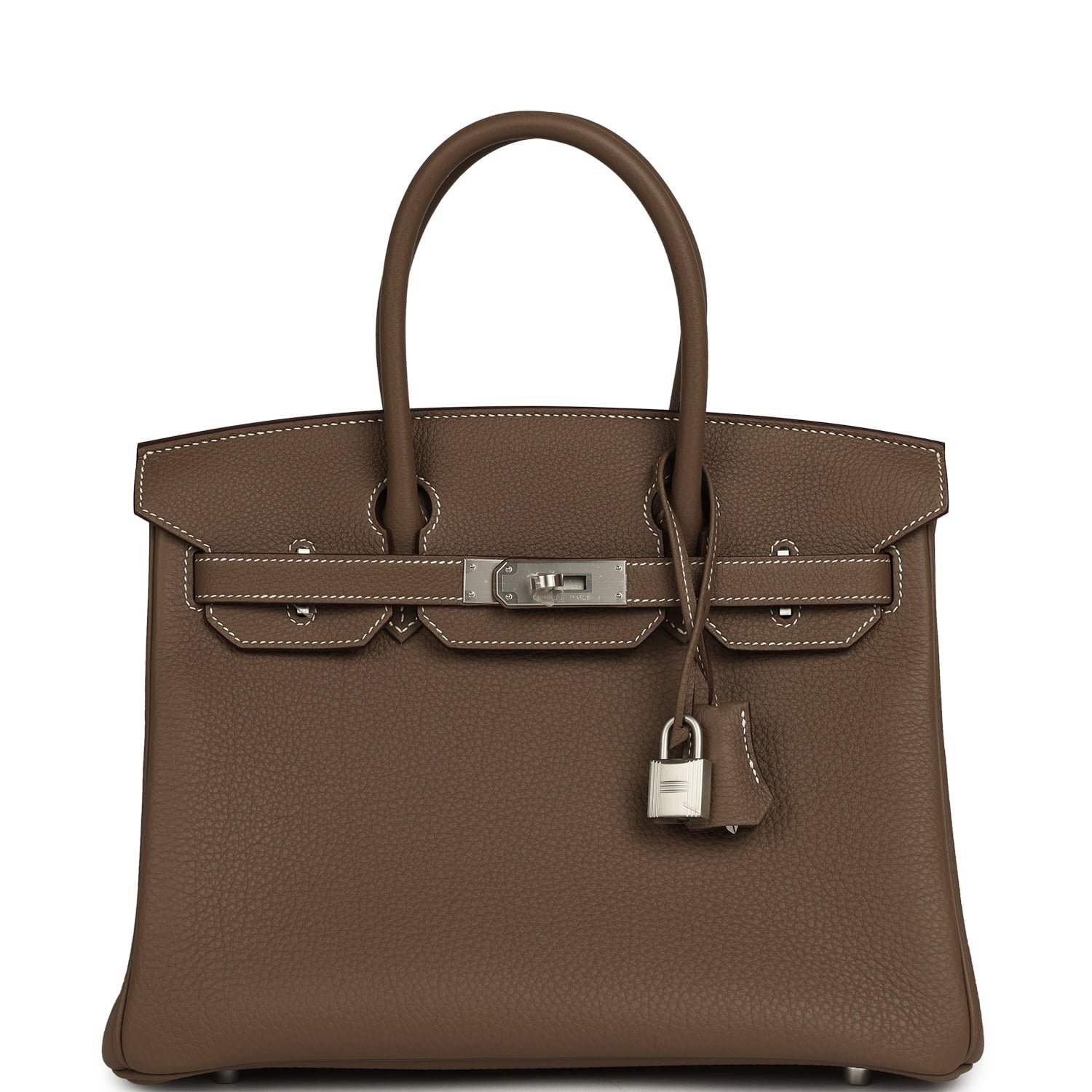
The Color: Etoupe and Its Enduring Appeal
Etoupe is one of Hermès's most celebrated neutrals. Described variously as a taupe, a warm grey, or a "greige" (grey-beige), it is a chameleon color that shifts subtly depending on lighting. In daylight it reads as a soft, earthy grey-brown; under warm indoor light it takes on a creamier, more beige tone. This ambiguity is exactly what makes Etoupe so wearable. It pairs effortlessly with black, navy, white, camel, and pastels alike, functioning almost like a neutral canvas while still offering more depth and character than a plain grey or beige.
First introduced in the early 2000s, Etoupe quickly became a staple in Hermès color libraries and remains in continuous production—a rarity in a house known for rotating seasonal shades. Its contrast stitching, typically executed in white or a lighter tonal thread, adds a subtle graphic element that highlights the bag's architecture.
The Leather: Togo and Its Virtues
Togo is a calfskin with a pebbled, slightly grained surface, produced from the top layer of the hide. It is one of Hermès's most popular leathers for good reason. Togo is remarkably durable, resistant to scratching, and holds its shape well over time while retaining a soft, supple hand. It takes color beautifully, which is why Etoupe in Togo appears rich and even rather than flat. Compared to Epsom, which is stiffer and more heavily embossed, or Swift, which is smoother and more delicate, Togo offers a forgiving, everyday-friendly character. It also has a natural ability to "relax" slightly with use, giving the bag a lived-in elegance rather than a rigid, boxy look.
The Hardware: Brushed Palladium
Hardware is often the detail that defines a Birkin's personality. Hermès offers gold-plated, palladium-plated, and, on special pieces, exotic finishes. Brushed palladium—sometimes called satiné or matte palladium—is palladium with a non-reflective, satin finish rather than the mirror-like polish of standard hardware. The result is understated and modern. Where polished hardware catches the light and announces itself, brushed palladium recedes, allowing the leather and the silhouette to take center stage. It also tends to show fingerprints and micro-scratches less obviously than polished metal, making it a practical choice for a bag intended to be carried regularly. Against Etoupe's warm grey tones, brushed palladium creates a cool, harmonious contrast that feels refined rather than flashy.
The Design Details
Every Birkin carries the same architectural signatures: the trapezoidal flap, the two leather straps with their iconic turn-lock closure, the rolled top handles, the clochette (the small leather holder for the padlock keys), the padlock itself, and the four metal feet protecting the base. The 30-centimeter version includes a removable shoulder strap, adding practicality that the larger 35 and 40 sizes technically also offer but which feels more natural on the smaller frame. Inside, the bag is lined in matching Chevre leather in most current production, with a zip pocket and an open pocket. The stamping—"Hermès Paris, Made in France"—sits discreetly beneath the flap.
Why This Combination Endures
The Birkin 30 Etoupe Togo with brushed palladium is not the loudest configuration, nor the rarest. It is, instead, a study in restraint. Etoupe is a color that never feels dated; Togo is a leather that ages gracefully; the 30 is a size that fits nearly every lifestyle; brushed palladium is a finish that whispers rather than shouts. Together, these choices produce a bag that is at once practical and precious—an object designed to be used, not merely admired behind glass.
In a market increasingly driven by hype and scarcity, this configuration represents something more enduring: the quiet confidence of a piece that does not need to announce its value. For collectors and first-time buyers alike, the Birkin 30 in Etoupe Togo with brushed palladium hardware remains one of the most intelligent, versatile, and timeless choices Hermès offers—a bag that will look as relevant in twenty years as it does today.
Caring for the Bag
To preserve Togo leather and brushed palladium, store the Birkin in its dust bag in a cool, dry place, stuffed lightly to maintain shape. Avoid prolonged exposure to direct sunlight, which can fade Etoupe's nuanced tones. Wipe hardware with a soft, dry cloth, and keep the bag away from water and oily substances. With minimal care, this combination will develop a gentle patina over the years, deepening its character without losing its elegance.
- Get link
- X
- Other Apps


Comments
Post a Comment