A Comprehensive Exploration of the Hermès Birkin 25 in Gris Meyer Togo with Permabrass Hardware
In the pantheon of luxury goods, few objects command the universal reverence, fascination, and economic gravity of the Hermès Birkin bag. More than a mere accessory, a Birkin represents an intersection of art, history, and status—a physical manifestation of quiet luxury and peerless craftsmanship. Among the myriad iterations produced by the prestigious French fashion house, specific combinations of size, leather, color, and hardware rise to the status of modern collector grails.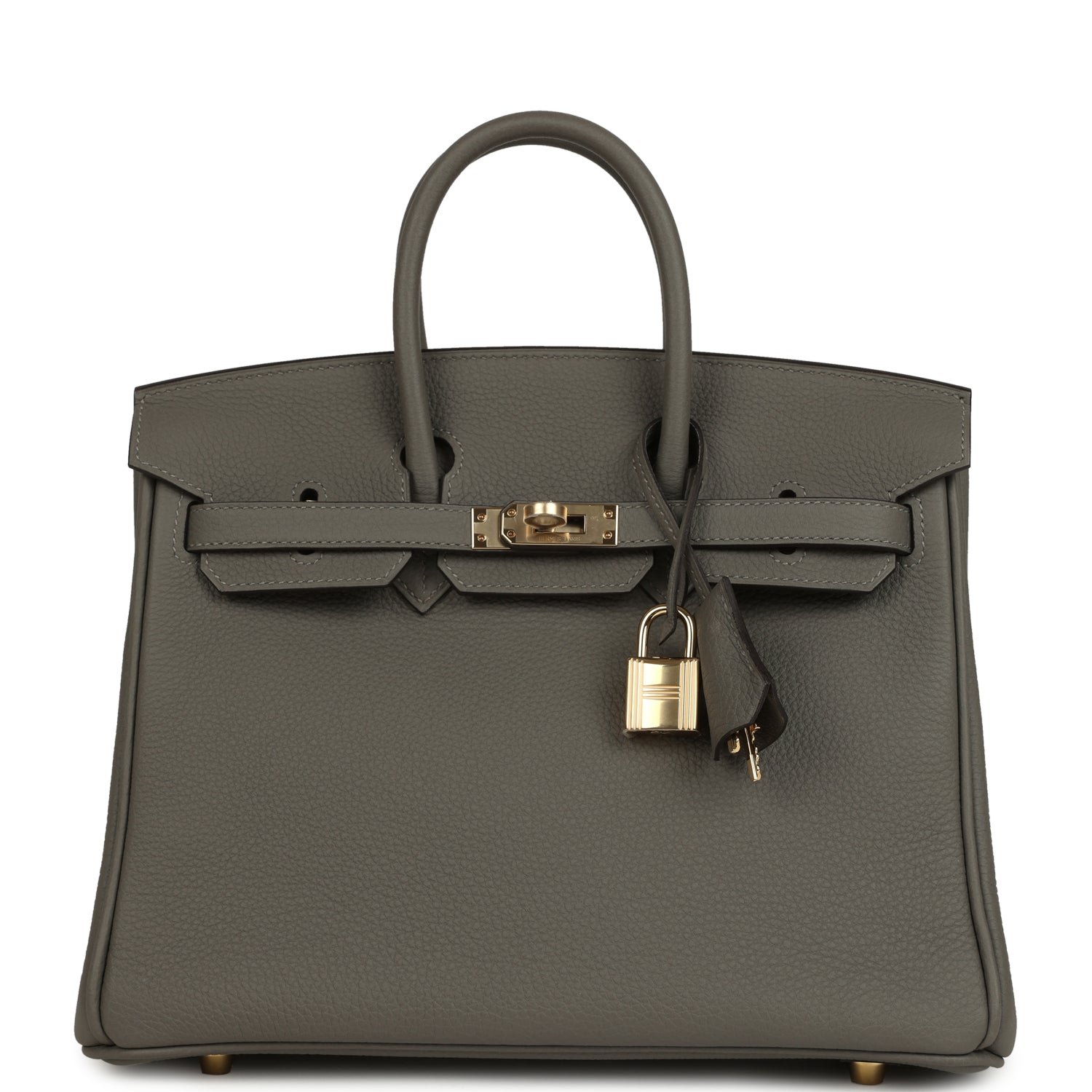
Enter the Hermès Birkin 25 in Gris Meyer Togo Leather with Permabrass Hardware. This specific specification harmonizes contemporary sophistication with timeless design, capturing the hearts of seasoned collectors and first-time luxury investors alike. This comprehensive analysis explores the history, design elements, material science, and cultural cachet that make this particular configuration an icon of modern elegance.
1. The Heritage of an Icon: From Aviation Inspiration to Global Phenomenon
To understand the weight of a Birkin 25, one must first look back to its origins. In 1984, a chance encounter on an Air France flight from Paris to London between actress and singer Jane Birkin and Hermès Chief Executive Jean-Louis Dumas birthed fashion history. Birkin, struggling with a straw bag that spilled its contents in the overhead compartment, lamented the absence of a stylish yet functional leather carryall for modern women and mothers. Dumas sketched the design right there on an airplane sick bag, creating a spacious silhouette featuring dual rolled handles, a flap closure, sangles (straps), a turn-lock, and protective base studs (clou).
Over the decades, the Birkin evolved from a practical utility tote into an elite symbol of scarcity and achievement. While the larger Birkin 35 and 40 ruled the late 20th century for their travel-friendly dimensions, the 21st century has unequivocally belonged to the Birkin 25. Compact, lightweight, and inherently chic, the Birkin 25 bridges daytime functionality with effortless evening glamour, making it the most coveted size in the current global market.
2. The Color Study: Decoding Gris Meyer
Color nomenclature at Hermès is an art form in its own right, often evoking natural landscapes, minerals, and sensory experiences. Gris Meyer, introduced relatively recently into the Hermès color palette, has quickly established itself as one of the maison's most versatile and sophisticated neutrals.
Gray is notoriously difficult to pitch correctly; it can easily skew too cold, too blue, or too industrial. Gris Meyer, however, hits a sublime middle ground. It is a warm, dove-gray undertoned with subtle earthy and taupe notes. This complexity allows the color to act as a true chameleon. Depending on the lighting and the surrounding wardrobe, Gris Meyer can look crisp and silvery or soft and muted.
For modern wardrobes dominated by minimalist aesthetics, capsule dressing, and neutral palettes (such as crisp whites, deep blacks, camel, and navy), Gris Meyer serves as an anchoring element. It offers the professional sobriety of black combined with the approachable lightness of grey, making it a masterclass in understated elegance.
3. The Canvas: Togo Leather and Its Enduring Appeal
Choosing the right leather is paramount when investing in an Hermès bag, as different hides drastically alter the bag's structure, weight, and aging process. The Birkin 25 in question is crafted from Togo leather—widely considered the king of Hermès leathers.
Introduced in 1997 and named after the African nation, Togo leather is derived from baby calfhide. It is a drummed, shrink-leather that boasts several distinct physical properties:
Prominent, Natural Grain: Togo features a fine, round grain with distinctive veining that gives the leather depth and tactile character.
Scratch and Scuff Resistance: Unlike smooth box calf leather, Togo is remarkably resilient. Its textured surface naturally conceals minor everyday wear and tear, making it an ideal choice for a daily-use bag.
Structural Integrity with a Soft Hand: Togo holds its shape remarkably well over decades, yet it retains a soft, pliable feel that molds comfortably against the body when carried.
Lightweight Nature: In a compact size like the Birkin 25, Togo keeps the overall weight of the bag remarkably light, ensuring effortless hand or crook-of-the-arm carriage.
Furthermore, the interior is lined with Gris Meyer Chèvre (Goatskin). Goatskin lining adds a luxurious contrast in texture; it is finer-grained, lightweight, incredibly durable, and possesses a subtle natural sheen that elevates the interior architecture of the bag.
4. The Hardware: The Understated Luxury of Permabrass
Hardware can completely transform the personality of an Hermès bag. While traditional choices oscillate between bright yellow Gold and cool, mirror-like Palladium, Hermès offers a rare and sophisticated alternative: Permabrass.
Permabrass is a specialized finish that bridges the gap between gold and silver tones. It features a muted, champagne-like matte gold finish. It lacks the stark, flashy yellow warmth of traditional gold hardware and the clinical chill of palladium. Instead, Permabrass offers a subtle, brushed, or satin-like metallic sheen that whispers rather than shouts.
Pairing Permabrass hardware with Gris Meyer Togo leather is an aesthetic masterstroke. The warm undertones of the champagne hardware pull out the subtle taupe warmth embedded within the Gris Meyer leather, creating a harmonious, monochromatic look that feels cohesive, modern, and extraordinarily high-end. For collectors who prefer to wear mixed-metal jewelry (transitioning seamlessly between yellow gold, white gold, and platinum), Permabrass acts as the ultimate universal connector.
5. Master Craftsmanship: The Soul of the Bag
What ultimately justifies the mystique and value of a Birkin 25 is the labor-intensive methodology behind its creation. Every single Hermès Birkin is constructed entirely by hand by a single artisan in the French workshops.
An artisan undergoes years of rigorous training before they are permitted to assemble a Birkin. The process begins with the meticulous selection of the Togo hide, inspecting it for natural imperfections. Using traditional saddle-stitching techniques—a method utilizing two needles and waxed linen thread pulled tight in opposite directions—the artisan ensures that if a thread were ever to break over decades of use, the stitch will not unravel.
Every edge is hand-painted, sanded, and sealed with multiple layers of wax; the metal feet (clous) are precisely positioned to protect the base; and the signature blind stamp (which includes the artisan’s identifier code and a year-indicating letter stamp) is delicately heat-pressed into the leather. This human element imbues the object with a soul, ensuring that no two bags are identical.
6. Market Dynamics, Investment Value, and Collectibility
Beyond its aesthetic merits, the Hermès Birkin occupies a unique tier in the global luxury economy. Due to Hermès' strict boutique quotas, artificial scarcity, and the famous "wishlist" system, acquiring a Birkin directly from a retail store is notoriously difficult, requiring a significant purchase history across other categories (such as ready-to-wear, shoes, jewelry, and home goods).
Consequently, the secondary market acts as the primary valuation engine for configurations like the Birkin 25 in Gris Meyer Togo with Permabrass hardware.
The Premium Factor: Neutral-toned Birkins in smaller sizes consistently command strong premiums on the resale market. Because Gris Meyer is a highly desirable neutral that pairs effortlessly with modern wardrobes, and Permabrass is a rarer, highly sought-after hardware choice, pieces in brand-new, pristine condition routinely trade well above their original retail price.
Store-Fresh Status: Examples found on the secondary market bearing "brand new with plastics intact" status—complete with original box, dust bags, raincoat, clochette, lock, and keys—are treated by financial analysts and collectors alike as liquid luxury assets.
Resilience Against Inflation: Unlike traditional equity markets or fast-fashion accessories that depreciate the moment they leave the store, top-tier Hermès leather goods have historically demonstrated incredible value retention, often outperforming traditional asset classes during economic volatility.
Conclusion
The Hermès Birkin 25 in Gris Meyer Togo with Permabrass Hardware is much more than a transient trend or a seasonal must-have. It is a masterclass in design restraint, balancing the structural perfection of Togo leather with the modern neutrality of Gris Meyer and the quiet sophistication of Permabrass.
It honors the storied heritage born over thirty years ago on a flight across the English Channel while catering to the modern collector's desire for versatility, discretion, and timeless style. Whether resting on a café chair in Paris, navigating a bustling airport terminal, or preserved as the crowning jewel of a curated handbag archive, this configuration stands as a definitive testament to the enduring power of uncompromising craftsmanship.


Comments
Post a Comment